Building Real Confidence in Children: Why “You’re Amazing!” Isn’t Enough
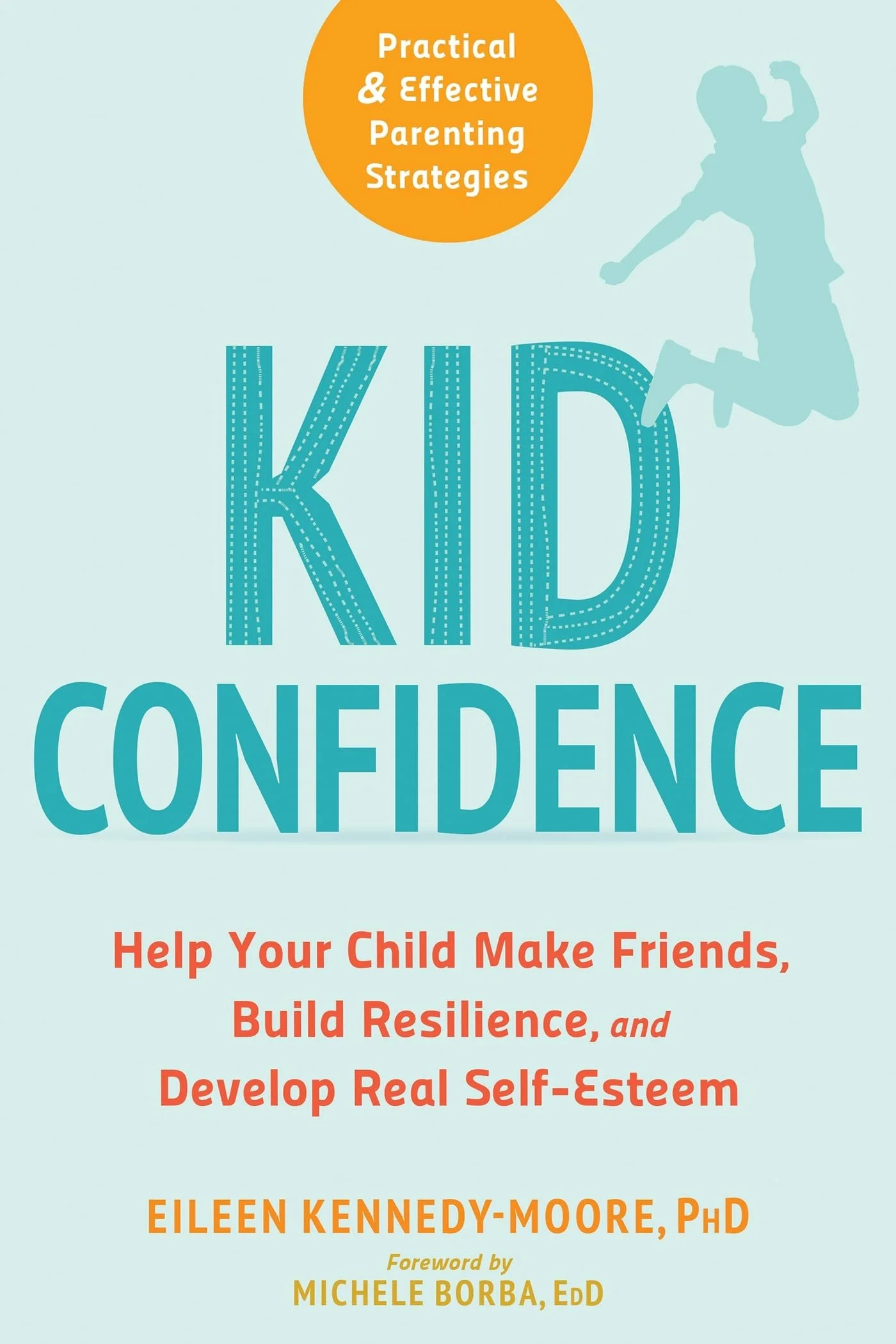
Discussing Chapter 1 of the book “Kid confidence: Help your child make friends,
build resilience, and develop real self-esteem” by Eileen Kennedy-Moore, PhD
3-4 MINUTE READ
Building Real Confidence in Children: Why “You’re Amazing!” Isn’t Enough
How to Spot Low Self-Esteem
Many parents come to therapy worried about their child’s confidence. You might recognize thoughts like:
“My son gets so hard on himself when he makes a mistake.”
“My daughter gives up before she even starts — she’s afraid to try.”
These can be signs that a child is struggling with self-esteem.
Psychologist Eileen Kennedy-Moore, PhD, explores this in her book Kid Confidence: Help Your Child Make Friends, Build Resilience, and Develop Real Self-Esteem. One of her core messages may feel surprising at first: simply telling kids that they’re wonderful doesn’t build lasting confidence — and in some cases, it can actually backfire.
What Is Self-Esteem, Really?
Self-esteem refers to how we evaluate ourselves, and the positive or negative feelings that come from those evaluations. When kids struggle with self-esteem, everyday challenges — a mistake, a test, a social misstep — can feel overwhelming or threatening.
Naturally, parents want to protect their children from feeling bad about themselves. But research shows that trying to shield kids from self-doubt or constantly boost their self-esteem can unintentionally create new problems.
When Protecting Self-Esteem Backfires
When children become overly focused on looking good or proving they’re good enough, they can fall into what psychologists call a self-handicapping trap, which involves creating circumstances to fail while also providing an excuse for this failure.
Take studying for a test as an example:
A child who feels secure enough to cope with challenges might start studying early, ask questions, or seek extra help if they’re confused.
A child who is worried about protecting their self-esteem might avoid studying, procrastinate, or refuse to ask for help — because doing so might make them feel “dumb.”
If the test goes poorly, that same child might use self-defeating strategies to protect their sense of self, such as:
“I didn’t have time to study.”
“The test was unfair.”
“The teacher doesn’t explain things well.”
These explanations soften the emotional blow, but they also prevent learning and growth. Ironically, the effort to feel good can end up undermining confidence altogether.
Why Praise Alone Doesn’t Work
Many well-intentioned parents try to build confidence by offering lots of praise or encouragement, such as:
“You’re amazing!”
“You’re the smartest kid I know!”
However, research suggests this approach can backfire — especially for children who already doubt themselves.
A 2014 study by psychologist Eddie Brummelman and colleagues found that inflated praise made children with low self-esteem feel worse when their performance didn’t match the high expectations implied by the praise.
Similarly, studies by Joanne Wood and colleagues (2009) found that encouraging college students to repeat positive self-statements like “I’m a lovable person” often intensified self-doubt, because those statements highlight the gap between how someone wishes they felt and how they actually feel.
What Does Build Real Confidence?
Research consistently shows that healthy self-esteem isn’t about constantly asking, “Am I good enough?” It’s about being able to let that question go. When children feel secure, they can focus on learning, connecting, and participating — rather than monitoring how they’re being judged.
Psychologist Richard Ryan and colleagues (2000, 2003) identified three key ingredients that support genuine self-esteem:
1. Connection
Children build confidence through meaningful relationships where they feel accepted and valued — not for being perfect, but for being themselves. A strong sense of belonging helps kids take social and emotional risks without fear of rejection.
2. Competence
Confidence grows when children develop skills and learn how to learn. This doesn’t mean constant success; it means experiencing effort, mistakes, and improvement in areas that matter to them. Mastery builds trust in their own abilities.
3. Choice
Children benefit from having opportunities to make decisions, explore their values, and act in ways that feel personally meaningful. When kids experience themselves as agents in their own lives, confidence follows.
Implications for Parents
Here are a few key takeaways based on this chapter. Rather than trying to boost self-esteem directly, parents can support confidence by:
Normalizing mistakes and struggles
Encouraging effort, curiosity, and problem-solving
Valuing connection over performance
Helping children reflect on what matters to them, not just how they compare to others
Real confidence isn’t loud or fragile. It’s quiet, flexible, and resilient — and it grows when children feel connected, capable, and free to be themselves.
Implications for Therapy
Helping children develop real confidence can feel like a big task—but research shows that it’s less about praise and more about connection, competence, and choice. Reflecting on how we support our children’s efforts, decision-making, and relationships can be a powerful first step in fostering lasting self-esteem.
Families who explore these ideas in a safe, supportive environment—whether at home, in parenting groups, or in therapy—often notice that small shifts in approach can make a meaningful difference. Children respond when they feel secure, capable, and free to make choices that matter to them, and parents often find themselves more confident in guiding those experiences.